MARK BERLADYN
PERSONAL PROJECT
IOS
2025 — PRESENT
Vault
AI Finance Assistant
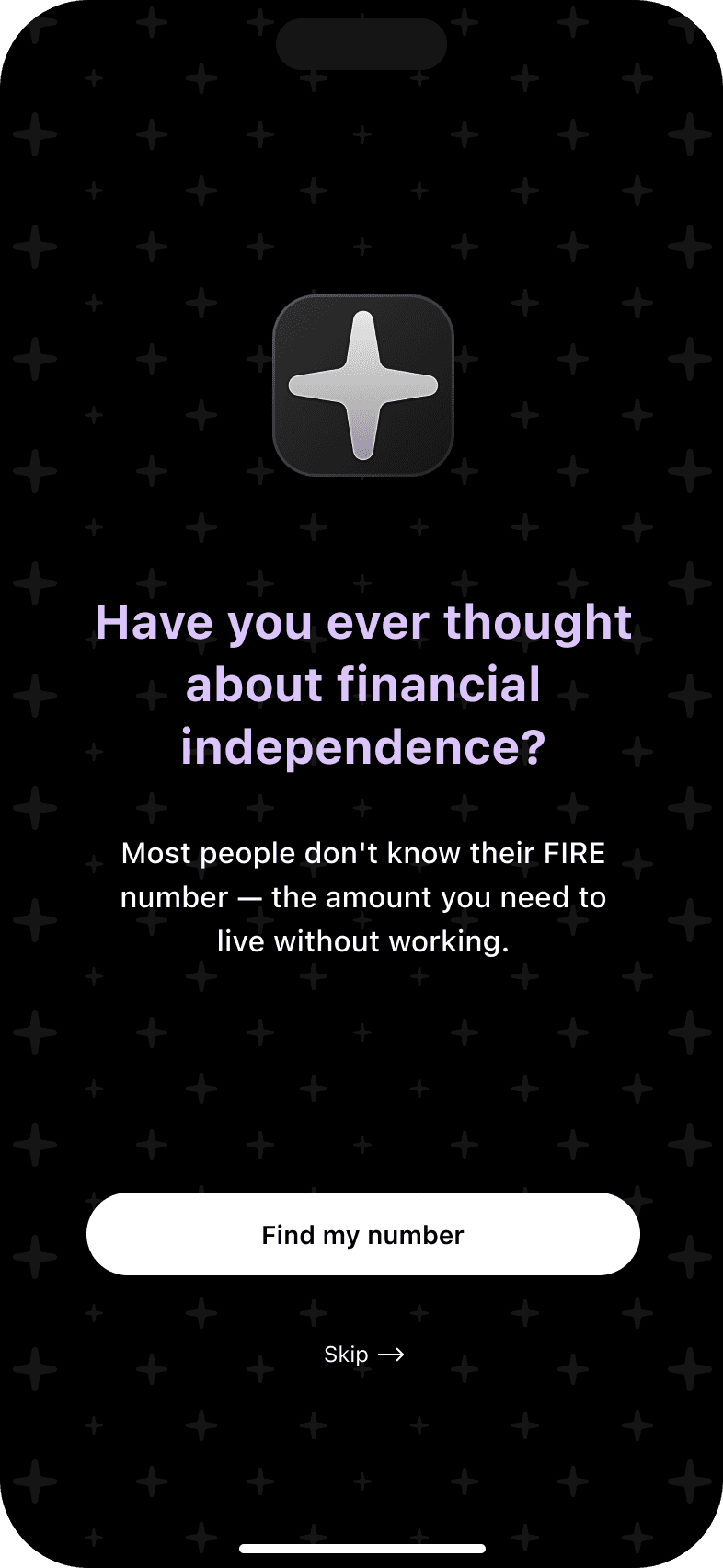
A mobile finance tracker with an AI consultant built into the core — designed to make financial independence accessible to everyone.
01 — THE PROBLEM
People don't know what they don't know.
A few friends told me the same thing in the same week: no idea where their money was going, credit card debt, nothing saved. When I dug deeper I realized this wasn't just my circle — it was everywhere.
The root cause was twofold. People don't track finances because it's tedious and results aren't immediate. But there's a deeper problem: basic financial knowledge is missing.
I talked to people actively looking for investments yielding 8% while carrying credit card debt at 28%. They weren't making bad decisions on purpose. Nobody taught them this in school.

02 — RESEARCH
Two groups.
One pattern.
I ran two types of interviews.
First — people with no financial system, to understand the pain. Consistent pattern: one income source, no tracking, savings in cash, debt on cards, no plan.
Then I found people who had actually reached financial independence — a yacht broker in the US, a large auto dealer, a developer, an investor, a gaming business owner.
Very different paths, one consistent pattern: they all worked the same four levers.
That became the foundation of the product.
" height="40px" id="cDpZ6WuaB" width="40px"/></svg>)
INCOME
" height="39px" id="vFNAHY3uI" transform="translate(0.5 0.5)" width="39px"/></svg>)
EXPENSES
" height="36px" id="FkwuOOMtF" transform="translate(0.5 2)" width="39px"/></svg>)
DEBT
" height="36px" id="kuU08wIPb" transform="translate(2 1.5)" width="36px"/></svg>)
SAVING
The four levers every financially independent person works — regardless of industry, background, or starting point.
03 — KEY DESIGN DECISIONS
Every choice
has a reason.
Decision 01
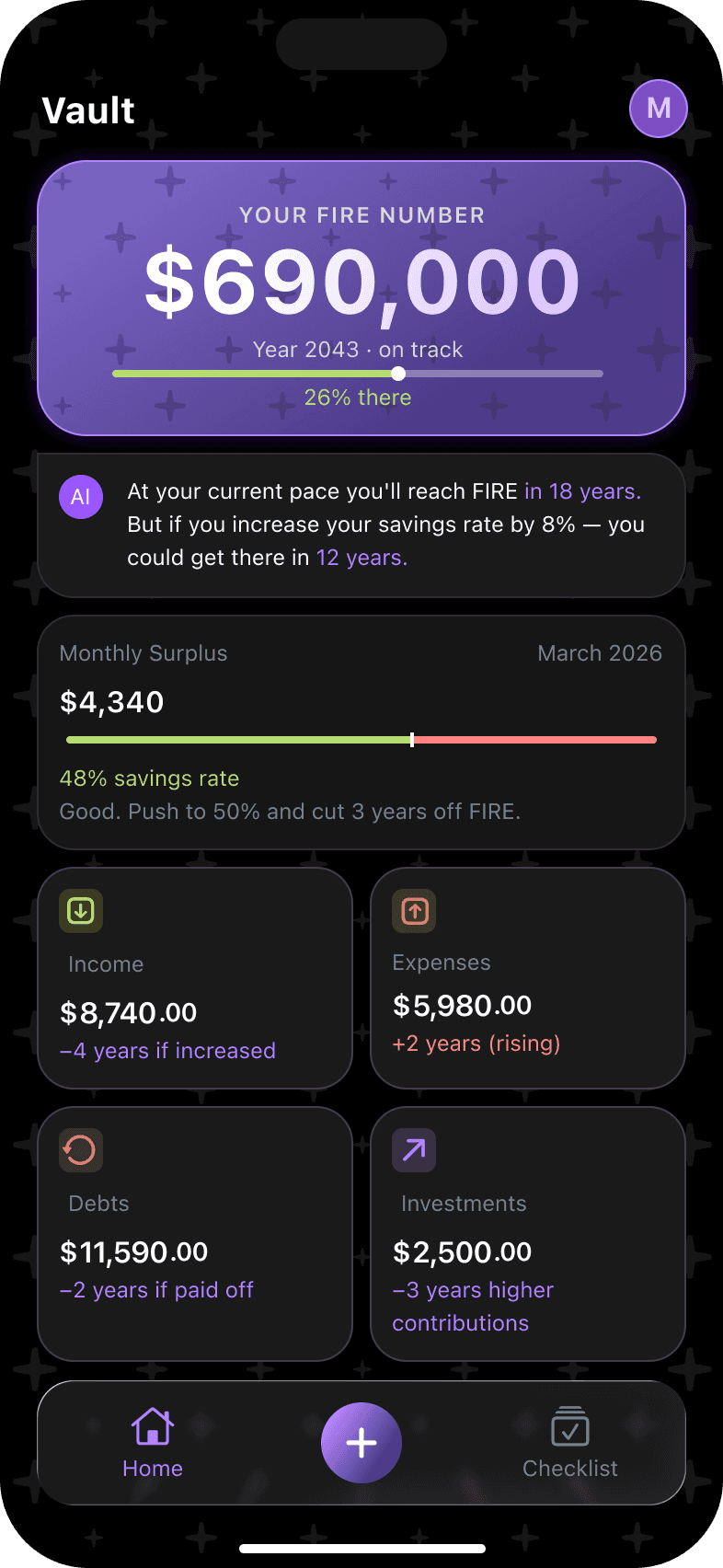
4 levers, not
infinite categories
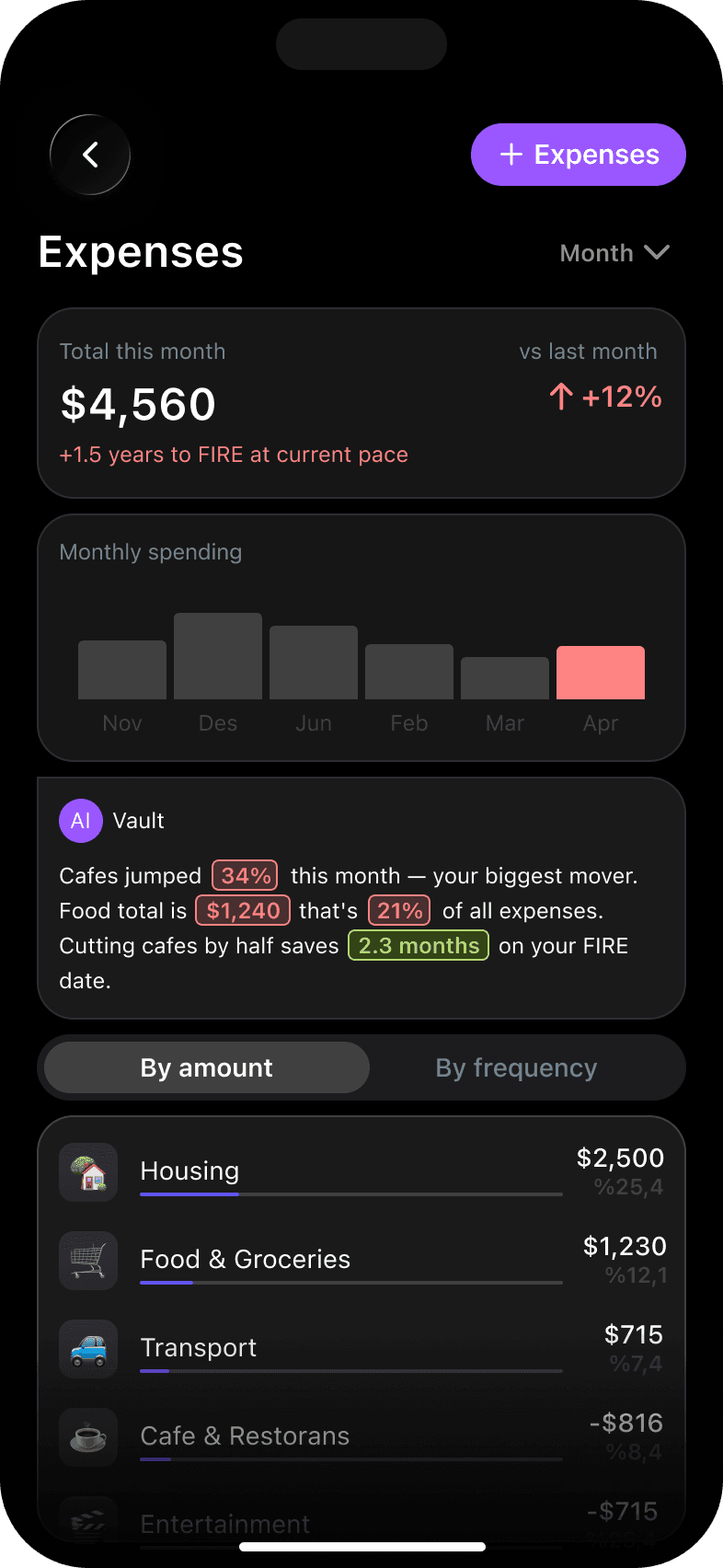
Most finance apps overwhelm users with analytics. I designed everything around four levers — income, expenses, savings, debt. The dashboard shows each lever with month-over-month delta.
Simple enough to understand in 10 seconds, powerful enough to change behavior.
Decision 02
Data entry
almost invisible
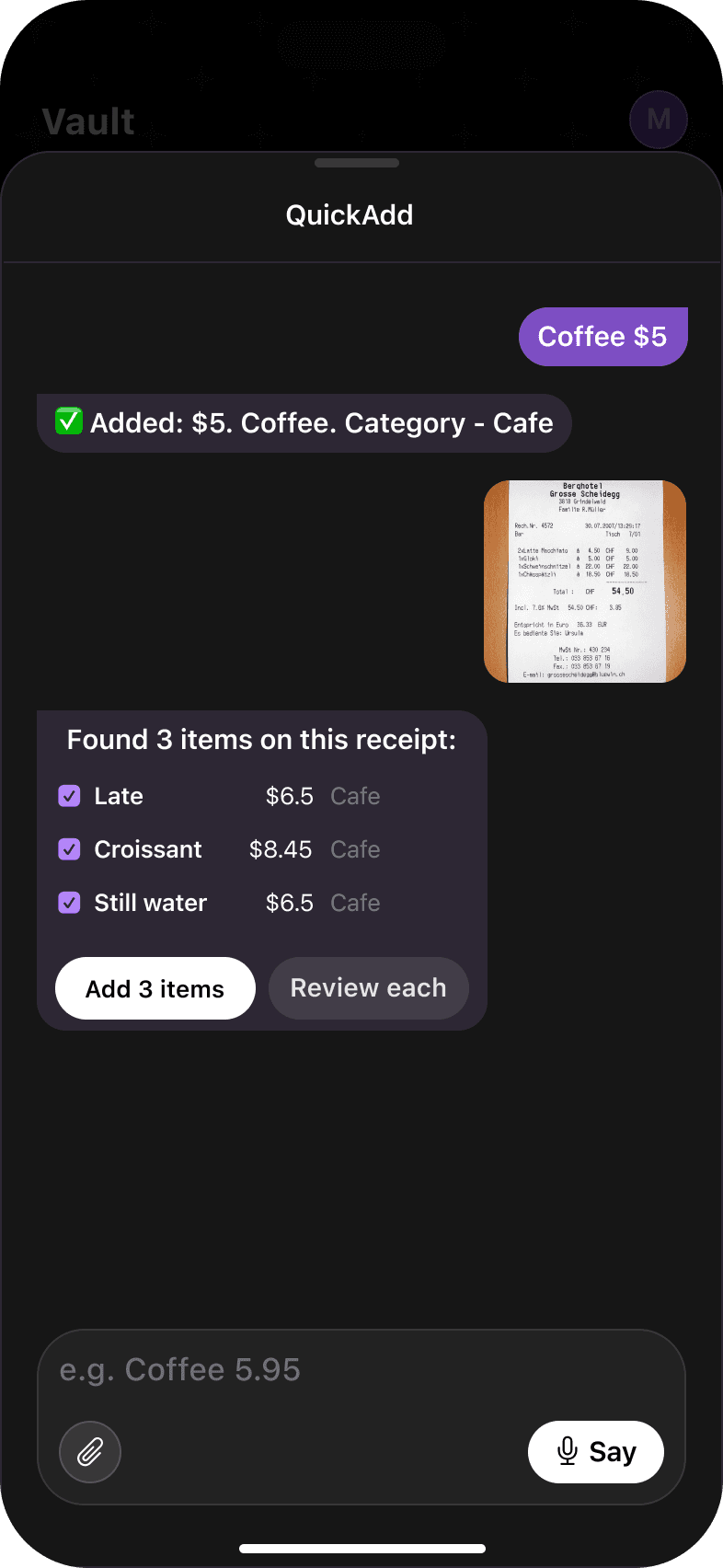
The biggest reason people abandon finance apps is manual logging. I designed three input methods to remove the friction entirely.
01
Upload bank statement
CSV or PDF → app categorizes everything automatically. One credit card statement gives you expenses, categories, debt balance, and interest rate in one tap.
02
Photo a receipt
OCR reads and creates the transaction automatically.
03
Just say it
"Coffee 5 dollars" → app creates the transaction, picks the category, adds the date.
Decision 03
FIRE number as a compass

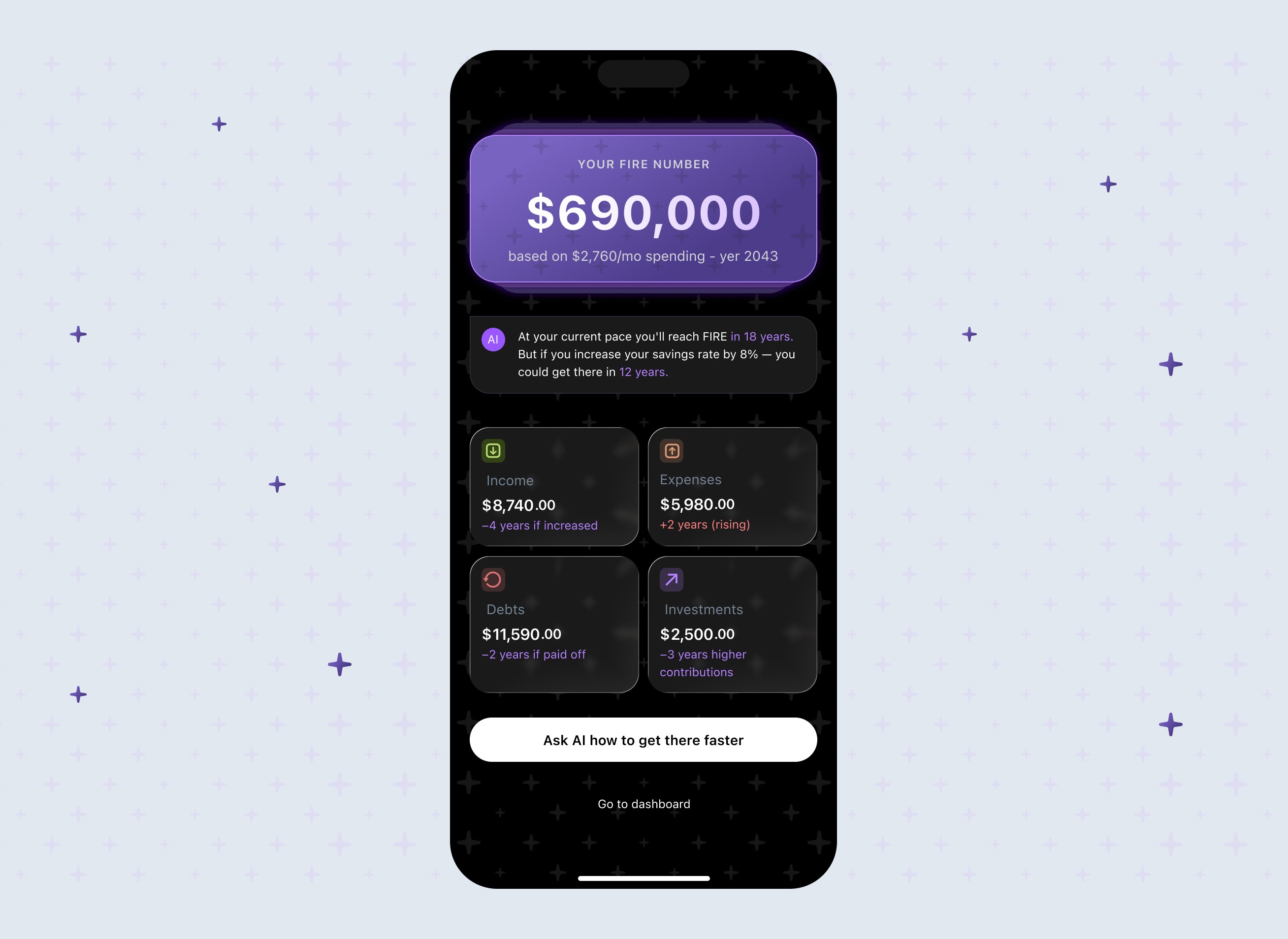
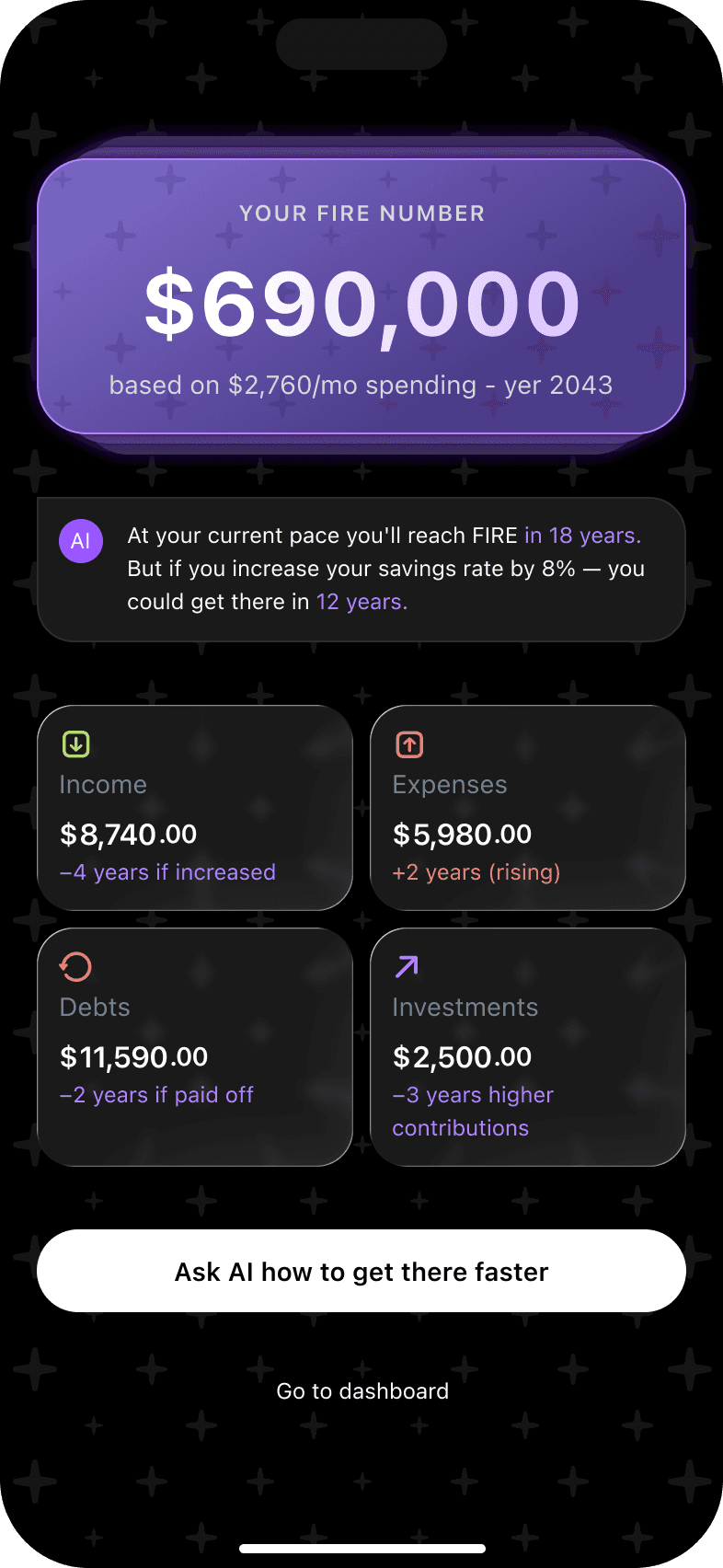
After onboarding the app shows your FIRE number — the capital needed to live without working — and how many years away you are at current pace.
Each lever shows its impact in years, not abstract percentages.
"At your current pace — 18 years. Increase savings rate by 8% — 12 years."
Every financial decision gets a concrete consequence.
Decision 04
Motivation through small wins
Finance apps create guilt. Vault creates momentum. Pay off a credit card — get a sticker. Complete a checklist item — earn a reward. Small, but it builds a habit where other apps build anxiety.
Decision 05
Duplicate detection
When connecting bank API, the same transaction could appear twice. A deduplication system matches by amount, merchant name, and timestamp within a 5-minute window — invisible to the user, essential for data integrity.
04 — STATUS
Live & growing.
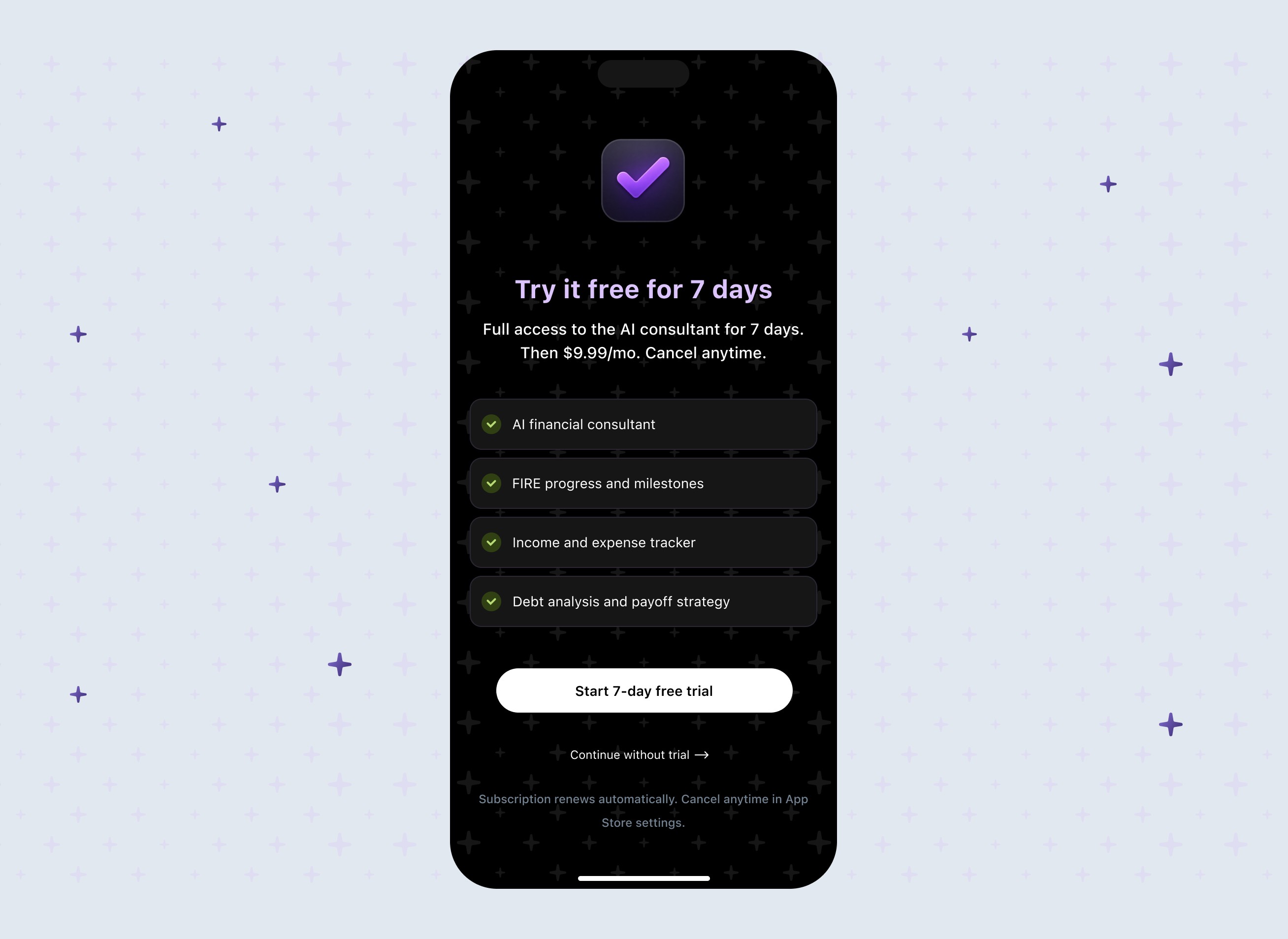
MVP launched and being used by early testers. Currently designing Bank API connection flow and iterating based on user feedback.
Built together with a backend developer. Research conducted with 10+ interview participants across two user groups.
10+
research participants
2
user groups studied
4
core design levers
MVP
live with testers